A startup that did not exist a year ago just became a billion-dollar company by betting against the default way of building AI infrastructure. Calcalist (Ctech) reports that Marlowe, an American company founded in May 2026, has raised a total of $277 million in seed funding at a $1.15 billion valuation. Tech in Asia says the round was led by Accel, with an earlier round led by Eclipse. This article summarizes published reports and company claims and is not investment advice.
What Marlowe is building
According to Calcalist (Ctech), Marlowe designs, builds and operates computing systems for AI inference, the stage where trained models answer questions and perform tasks. Instead of selling raw capacity or just software for one chip, it combines processors, networking, data center design and software, and matches the hardware to a specific workload. SiliconANGLE adds that each facility is tuned for a category of inference work through its chip mix, network setup and software.
The pitch is aimed at Nvidia's grip on the market. Ctech explains that much industry software and tooling was built around Nvidia chips, so rival processors can end up underused. Marlowe says its first phase will use chips from AMD and from Etched, an inference chip startup that SiliconANGLE says was valued at $21 billion in August, plus Broadcom networking. It has not ruled out Nvidia chips later.
The claims, and why to treat them carefully
Marlowe's founders cite a possible 2x to 3x advantage in computing output per dollar and per watt over conventional GPU cloud setups. SiliconANGLE quotes the founders saying modest gains at several layers multiply into that advantage. Ctech is explicit that these numbers are a target and projection, not independently verified performance. There are no public benchmarks in the reports we read.
Customers and timeline
Per Ctech, Marlowe has signed agreements for two sites. The first, built on Etched chips, is due to go live in December 2026 for a large AI coding company that has not been named. A second, larger site using AMD's new Helios systems is planned for the second quarter of 2027, and a third is covered by a letter of intent. The company says it has three inference customers and has not named them or the site locations. Tech in Asia and SiliconANGLE also say the first site comes online in December.
The money and the people
Ctech lists Accel as the lead of the latest round, with Bessemer, Altimeter, Atreides, Journey, Valor, Emergence Capital, Pitango and Village Global among institutions. Angels named by Ctech include Wiz co-founder Assaf Rappaport, KKR co-founder Henry Kravis, Uber CEO Dara Khosrowshahi, Box CEO Aaron Levie and former LinkedIn CEO Ryan Roslansky, and Stripe's Patrick and John Collison via a new vehicle. Ctech says the company has nearly 30 employees, in Bellevue, Washington, and Redwood City, California, and that it plans sites of tens of megawatts, growing gradually. Marlowe says building data centers has become 40% more expensive since 2020. The funding will go mostly to chips and networking gear, operations and hiring.
Where the reports disagree
The sources do not line up on every detail. SiliconANGLE's headline says $277 million but its text says a $227 million seed round, so we use the $277 million that Ctech and Tech in Asia report. SiliconANGLE says the company was founded last year, while Ctech and Tech in Asia say May 2026. Ctech describes co-founder Dan Lewis as a former Microsoft executive, while Tech in Asia calls him a Convoy co-founder. We have not resolved these, so treat them as open.
What to watch next
Watch whether the Etched-based site goes live in December as promised, whether Marlowe names a customer, and whether anyone publishes real performance data against Nvidia-based clouds. The AMD Helios site in 2027 is the bigger test of whether non-Nvidia systems can scale.
Why it matters
AI demand is shifting from training models to running them, and the cost of that inference is the new bottleneck. A fresh unicorn built on Nvidia's rivals shows investors are willing to fund alternatives, but a seed round, a few contracts and a projection are not proof. Until real results appear, this is a big bet, not a finished product.
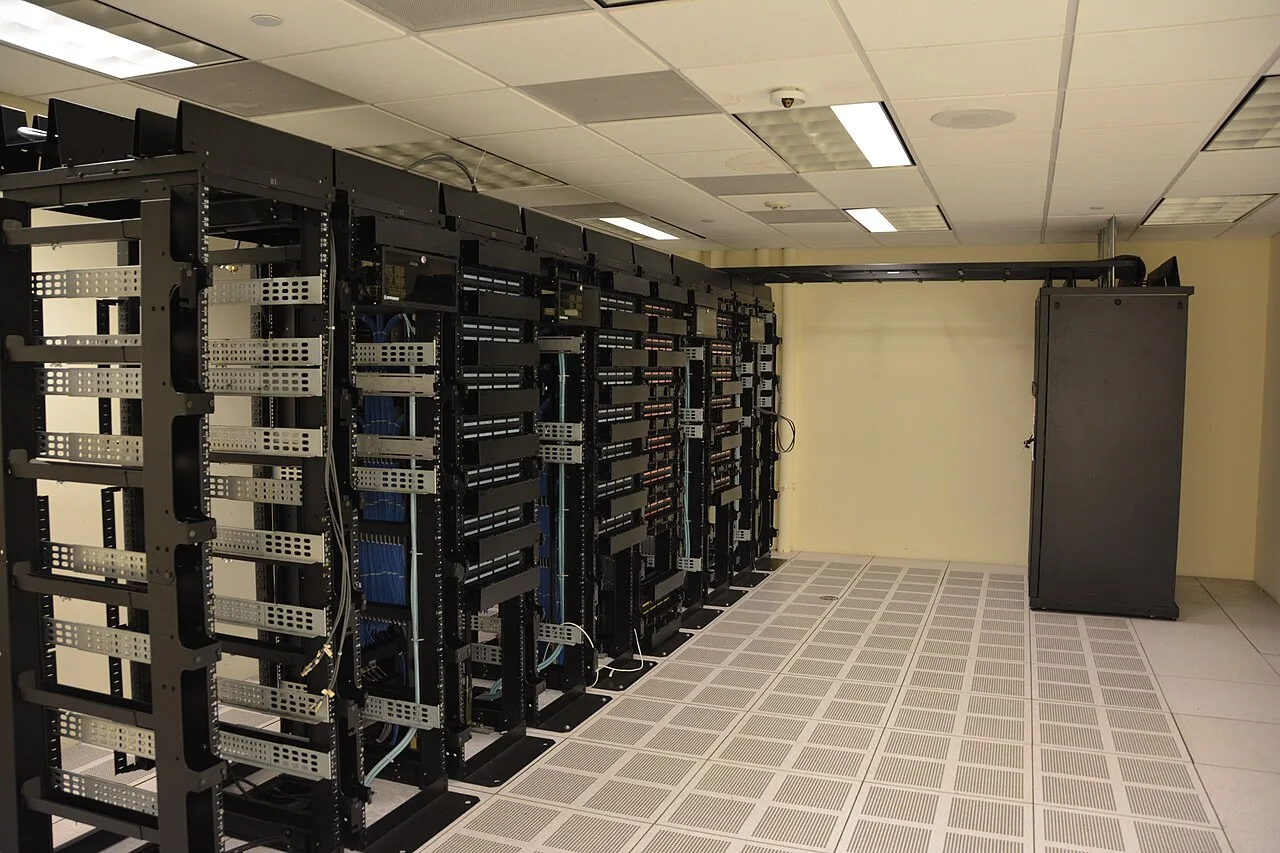
Cover image: Generic data center server racks, photo by Carl Lender, CC BY 2.0, via Wikimedia Commons. Illustrative only, not a Marlowe facility.