Nvidia is now selling the brain of a Windows laptop, not just the graphics card. HP's OmniBook Ultra 16 is built on Nvidia's RTX Spark N1X platform and launched in India this week from ₹5,49,999, per TechEnclave, with shipments starting December 1. It is aimed at developers and creators who want to run AI models on the laptop instead of in the cloud.
What is inside
Innopark IT says the RTX Spark N1X combines a 20-core CPU with a 6,144-core integrated Blackwell RTX graphics unit and supports up to 128GB of LPDDR5x memory shared between the two. HP claims up to 1 petaflop of AI performance at FP4 precision, a figure from the company and the report, not an independent test. The chip runs on Nvidia's CUDA software stack and ships with Windows 11.
The shared pool is the point. Large AI models need a lot of fast memory, and a laptop with 128GB the processor and graphics can both use can load models that normally need a workstation or a cloud server. The Techaeris review says it ran 70-billion and 120-billion-parameter language models locally on the 128GB version. It also describes RTX Spark as an Arm-based Windows platform that competes with Intel and AMD, and mainly with Qualcomm.
Price and availability
In India, Innopark IT lists the 64GB model with a 1TB SSD at ₹5,49,999 and the 128GB model with a 1TB SSD at ₹6,99,999. It is sold through the HP Online Store only, with cashback of up to ₹40,000 on select bank cards. I am not converting these to dollars or rupiah, because the sources do not.
The laptop was first unveiled globally in June 2026, per Innopark IT. Windows Central says it is sold on HP's website and at Best Buy in the U.S. The Techaeris reviewer says pricing for the maxed-out 128GB U.S. version required a custom quote, so check current prices before comparing.
The screen and the battery
The display is a 16-inch 3K OLED touchscreen at 2,880 by 1,800 pixels with a variable refresh rate of up to 120Hz, and it covers the full DCI-P3 color range, per TechEnclave. The battery is 99Wh with a 140W charger. Windows Central says HP rates it for 17 hours of use. Ports include two USB-C, two USB-A, HDMI 2.1 and a microSD reader.
The catches
The Techaeris review gave the laptop 9.6 out of 10, but it lists real drawbacks: flagship pricing, fan noise and surface heat under load, battery drain during heavy compute, soldered memory, a weight of 4.89 pounds, and overhead from Windows on Arm translation when running apps not built for Arm. The reviewer calls it a working tool, not an everyday laptop, and says that if your day is documents and casual gaming, 128GB is headroom you will never use.
That last point matters. Windows on Arm has had app compatibility gaps before, and a reviewer's score is one opinion from one tester, who also noted the 128GB price was unclear.
Who is this for
Almost no one needs this. The sources describe machine learning researchers, visual effects artists and senior engineers who want to work on proprietary data without sending it to a cloud service. For those buyers, running a very large model on a laptop is the pitch. For everyone else, the price, the weight and the heat will matter more than the petaflop claim. I found no independent benchmark of the 1 petaflop claim in these sources, so the AI performance numbers should be read as vendor figures.
Why it matters
For years, laptop chips came from Intel, AMD, Apple and Qualcomm, with Nvidia supplying the graphics. RTX Spark is Nvidia stepping into the processor slot, and it is betting that local AI is a reason to buy a laptop. If that works, it pressures the companies that supply the rest of the PC chip market. If it does not, this stays an expensive niche machine. I found no Indonesia launch or pricing in these sources, so Indonesian buyers should check with HP directly. This is news, not a buying recommendation.
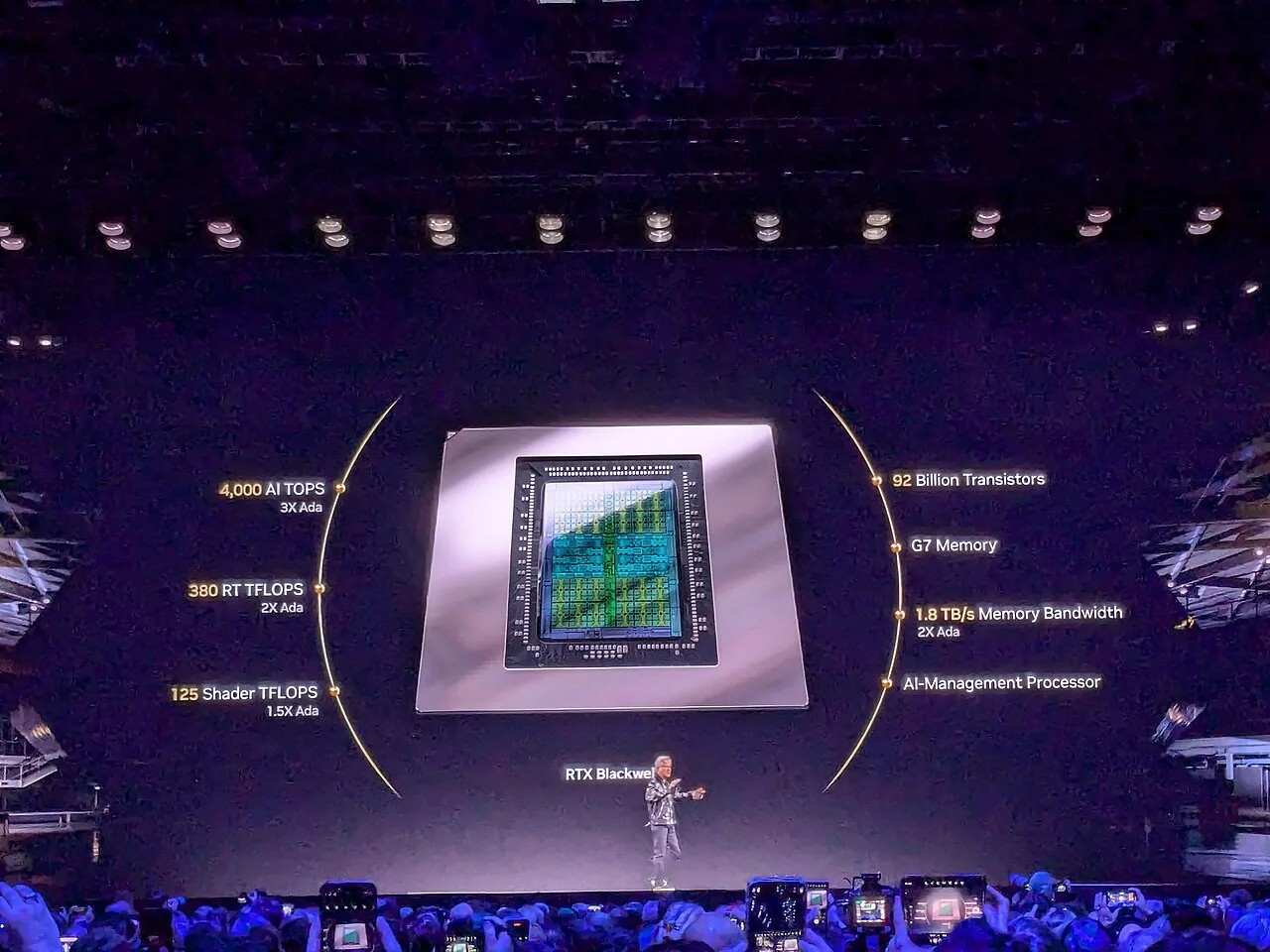
Cover image: Nvidia RTX Blackwell keynote slide at CES 2025, CC0, via Wikimedia Commons. Earlier desktop GPU slide, not the RTX Spark laptop chip.