Attackers broke into a company's phone and meeting server, took full control in half an hour and stole business data, and researchers now say they may have had help from commercial AI services. The target was Mitel's MiCollab collaboration platform, and the flaws were being used before the fix existed.
What Accenture found
Threat actors exploited several MiCollab vulnerabilities as zero-days in a data theft campaign, according to Accenture's Apex Labs, as reported by SecurityWeek. In one attack, hackers got privileged access to a MiCollab server and quickly reached the victim's identity systems. Accenture noted that the product is often exposed to the internet and connected to Active Directory, which makes it attractive to attackers.
Evidence shows a web shell was deployed on a victim's systems on November 15. Mitel announced its patches on November 16, according to the same report. So the attack came before the public fix.
The timeline is the scary part
Accenture said the attacker ran the first command 12 minutes after the first request and reached root on the MiCollab server within 30 minutes. Within 32 minutes, they used directory credentials stored by MiCollab's LDAP connector to authenticate to a domain controller, per The Hacker News. About 20 hours after the first observed request, the intruders reached internal backup and database servers, according to SecurityWeek.
A second organization's MiCollab server had been talking to the same attacker infrastructure since November 9. Accenture could not say how that server was compromised because it also ran an older, vulnerable version.
Where the AI comes in
Accenture found that the attacker's infrastructure communicated with two unnamed commercial AI API services. "Because the telemetry is sampled, Apex Labs cannot determine precisely how the threat actor used the services," Accenture said, adding that the activity is consistent with uses such as data triage, support for exploitation or web-shell work, and preparing extortion material.
One detail stands out: after an eight-hour silence, traffic to the AI services resumed at exactly the same second the attackers sent an authentication bypass request to the target server, per SecurityWeek. That fits an automated or AI-assisted workflow, but Accenture did not claim to know what the AI did. Treat "AI-assisted" as a suspicion, not a proven fact.
The five flaws
Mitel's November 16 patches cover five bugs in the audio, web and video conferencing component, listed by The Hacker News. They include an arbitrary file upload (CVSS 5.3), an XML injection (9.0), an unauthorized access flaw (5.9), a command injection (10.0) and an authentication bypass (5.3). All can be exploited by unauthenticated attackers. They affect MiCollab 10.3 and earlier. Mitel's fix is release 10.3.0.18 or later.
CISA added all five to its Known Exploited Vulnerabilities catalog on Wednesday, November 25. Federal agencies must fix four of them by November 28 and the last by December 9, per SecurityWeek. Mitel's own advisory, last updated on November 24, does not mention exploitation in the wild, the same report notes.
What to do now
Patch to the fixed release. If you cannot patch, restrict external access to the affected conferencing component, as Mitel advises, according to The Hacker News. Accenture also warned that servers may have been compromised before patching, so check for indicators of compromise and not just the version number. The indicators are listed in the Accenture findings summarized by The Hacker News.
What to watch next
Watch for Mitel to update its advisory, for the name of any group behind the campaign, and for more victims. Accenture has not linked the attacks to a known cybercrime group, but believes they may be part of an extortion campaign. CISA's catalog already lists about a dozen Mitel flaws, a sign that attackers return to this vendor often.
Why it matters
Phone and meeting servers sit in the middle of corporate networks, hold directory credentials and often face the internet. Twelve minutes to first command and thirty to root leaves almost no time for human defenders. If AI tools are speeding up the boring parts of an intrusion, the gap between a patch release and a break-in gets smaller. For security teams, the lesson is to treat any internet-facing collaboration server as a priority patch and to assume compromise checks may be needed after the fact.
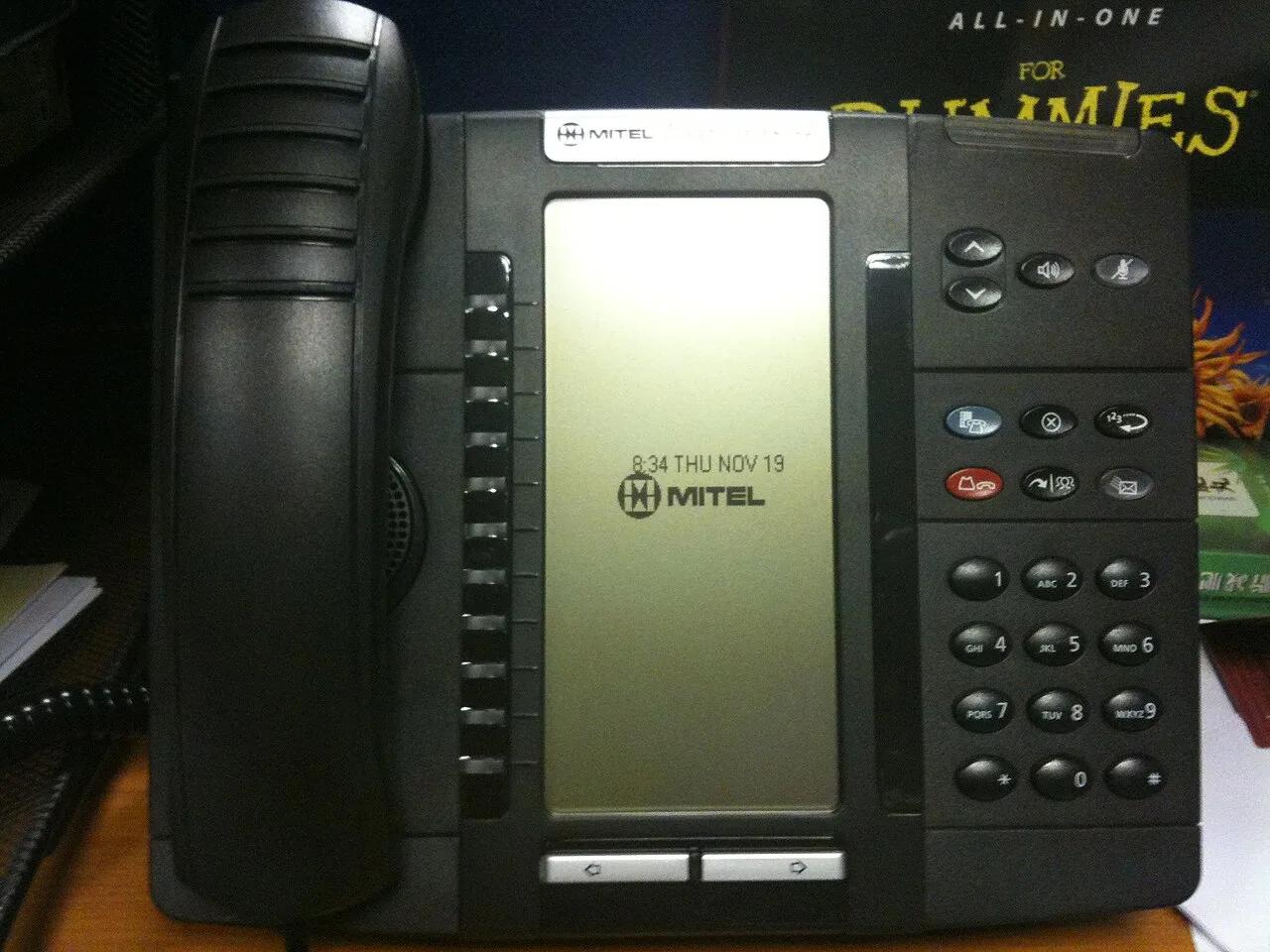
Cover image: Mitel telephone 2009 by Ged Carroll, CC BY 2.0, via Wikimedia Commons. Illustrative photo of a Mitel 5320 desk phone, not the affected MiCollab software.