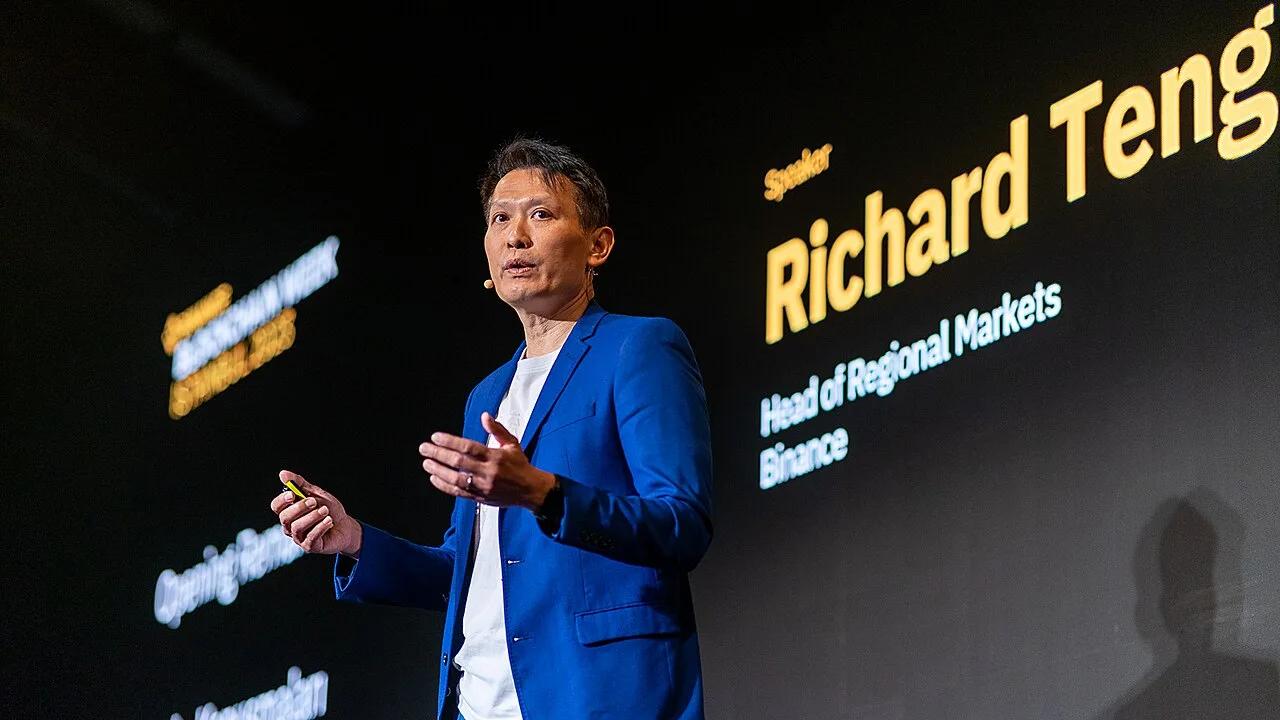
When $6.3 billion started leaving Binance wallets on Oct. 29, investigators first had to work out whether the world's largest crypto exchange was really being hacked. The National reports that panelists who took part in the response, speaking at Binance Blockchain Week in Bangkok on Saturday, described a "frantic" first hour. Within about 20 minutes, attackers had moved most of the $6.34 billion across different blockchains. This post reports what officials, companies and the press say. It is not investment advice or security advice.
The first hour
According to The National, blockchain intelligence firm TRM Labs says the attackers spent at least 36 hours on final preparations. Funds began leaving Binance wallets at about 8:05 p.m. GMT on Oct. 29. Within an hour, stablecoin issuers Tether and Circle had started freezing stolen assets.
Tom McLouth of Chainalysis told the panel his team got an alert within the first hour, but it could have looked like Binance moving assets between its own wallets. "We made the decision in the first hour to identify it as suspected stolen funds. That's the human decision," he said, per The National. Antonio Alvarez Lorenzo, Binance's deputy chief compliance officer, said "Everything was happening in parallel, not one, two, three."
Who was blamed
CoinDesk reports that TRM Labs tied the attack to a North Korean group called TraderTraitor, and that the FBI also pointed to North Korea. The CNBC reported on Nov. 3 that North Korea denied the allegations and called them a "grave political provocation". In a Nov. 3 report, Binance said hackers used fake job interviews, malicious software and compromised internal AI tools to reach the systems that control its wallets, according to CoinDesk.
How much was frozen, and how much came back
The National says stablecoin issuers and blockchain networks froze about $2.7 billion within hours, and the total later reached roughly $2.85 billion, about 45% of the amount stolen. The same report is blunt: freezing is not recovering, and there is no comprehensive public figure for funds returned to Binance.
A court is part of the effort. Reuters reported on Nov. 18 that the Abu Dhabi Global Market Court ordered 18 companies, including Circle and World Liberty Financial, to keep tokens frozen, and that the court said the named companies were not accused of wrongdoing. The US Justice Department also posted a notice on Nov. 23 titled "United States Files Action to Recover More Than $1 Billion in Cryptocurrency Assets Stolen by North Korean Cyber Actors in Binance Hack". We could not open the full page, so we rely on that title only. A secondary site, Coinsinsight, says court documents list 192 tokens on 11 networks and that the Abu Dhabi court will review on Dec. 1 whether to extend an injunction. We treat that last detail as unconfirmed.
What Binance says about customers
CoinDesk says Binance announced, in a statement dated Nov. 26, that the withdrawal suspension from the incident has been fully lifted, though a small number of networks remain paused for unrelated maintenance. Binance said it put back 90% of the stolen crypto by Oct. 31 and 98% by Nov. 3, paying from company money and its SAFU emergency reserve. The The National says all affected customer assets were replaced by Nov. 13. Binance says all assets remain fully backed, and warned users that scammers show up after events like this. It said it will never ask for a password, a two-factor code or a seed phrase.
The legal gap
The hardest part is not tracing, it is paperwork. Lt. Col. Thanatus Kangruambutr of the Royal Thai Police told the panel: "Wallet is just a number" and "When we just finish writing the paperwork, the money is gone," per The National. Jonno Newman of TRM Labs compared defense to protecting 100 entry points, saying attackers "only need to find one".
Why it matters
This is the largest crypto theft on record, according to CoinDesk, and it shows two things at once. First, the weak point was people and tools: a fake job interview and compromised internal AI tools, per Binance's own report. Second, the freeze worked only as far as stablecoin issuers and courts could act. Bitcoin and other assets that no one can freeze are harder to stop. For users, the main lesson from Binance's own warning is simple: no real exchange support team will ask for your seed phrase or ask you to move funds to a "vault".
Cover photo: Cryptocurrency logos around a hand holding a bitcoin coin, photo by voytek pavlik, public domain, via Wikimedia Commons. Illustrative image, not from the hack.