A company that has not yet put a single drug into a human being just raised $5 billion. Isomorphic Labs, the AI drug-design company spun out of Google DeepMind, closed a Series C that sources describe as one of the largest venture rounds in biotech history. The bet is simple and huge: that AI can design medicine faster than slow trial and error.
The round in numbers
The round was co-led by Greenoaks and Sequoia Capital, with Andreessen Horowitz and other new investors joining, per Startmag. Alphabet, Google's parent, also invested. Earlier backers all came back: Thrive Capital, MGX, GV, CapitalG, Temasek and the UK Sovereign AI Fund, per Startmag. The company has now raised more than $7.7 billion in total, per Startmag. That includes a $2.1 billion Series B in May 2026 and a first outside round of $600 million in 2025, per DistilINFO. In other words, it raised more than twice its last round only about six months later.
The $50 billion question
Bloomberg reported that the deal valued the company at roughly $50 billion, per Wortins, summarizing TechCrunch. Isomorphic has not officially disclosed a valuation, per Startmag. DistilINFO adds that the figure has not been confirmed as the final deal value. Treat $50 billion as a press report, not a fact. Dates also differ across sources: DistilINFO says the round was announced on November 17, while coverage ran from November 24 to 27.
What the money is for
Isomorphic was founded in 2021 by Demis Hassabis, who shared the 2024 Nobel Prize in Chemistry for the AlphaFold protein-structure work, per Startmag. Its core tool is a proprietary engine called IsoDDE, which designs molecules and predicts their properties before lab testing, per Startmag. The company says it beat AlphaFold 3 on one protein-ligand prediction test. That is a company claim. It says it runs more than 20 research programs, mostly in cancer and immune diseases, per Startmag. It has partnerships with Eli Lilly, Novartis and Johnson & Johnson, per Wortins, summarizing TechCrunch.
The catch: no drug in humans yet
This is the part skeptics point to. Isomorphic has not publicly announced a drug candidate entering human trials, per DistilINFO. Wortins, summarizing TechCrunch says the company reports positive preclinical results in cancer and immunology, which means lab and animal work, not patients. DistilINFO also warns that raising money does not show the technology will produce approved medicines or steady revenue. Many promising drug approaches have failed in the clinic. Company president Max Jaderberg told CNBC the company plans to use the capital to move toward clinical trials, per CNBC.
Background: from AlphaFold to a drug company
AlphaFold, built at DeepMind, predicts the 3D shape of proteins from their amino acid sequences, per Startmag. Scientists have used it to study complex diseases, antibiotic resistance and enzymes that can break down plastic, per Startmag. Isomorphic tries to go one step further: not just predict how proteins fold, but design the molecules that act on them. That is a much harder job, and it is the one investors are now paying for.
Why investors are paying up
The pitch is speed and cost. Drug development usually takes many years and costs a lot, and most candidates fail. If software can pick better molecules earlier, even a small gain in success rates could be worth a great deal to drugmakers. Big pharma partnerships suggest the industry wants to test that claim. The size of the check also shows how much money is chasing anything tied to Hassabis, DeepMind and AI that does real science, not just chat.
What to watch next
Watch for the first Isomorphic drug candidate to enter human trials, and for any official statement on the valuation. Watch whether the Lilly, Novartis and J&J partnerships produce named programs. Also watch rivals: if investors write checks this large for a company without clinical data, others in AI drug discovery will likely try to raise at similar prices.
Why it matters
If AI-designed drugs work, the payoff is faster treatments for cancer and immune diseases. If they do not, a $5 billion round on a possible $50 billion price tag will look like a bubble. Right now the money is real, the valuation is a press report, and the proof is still years away. This is a news report, not investment advice.
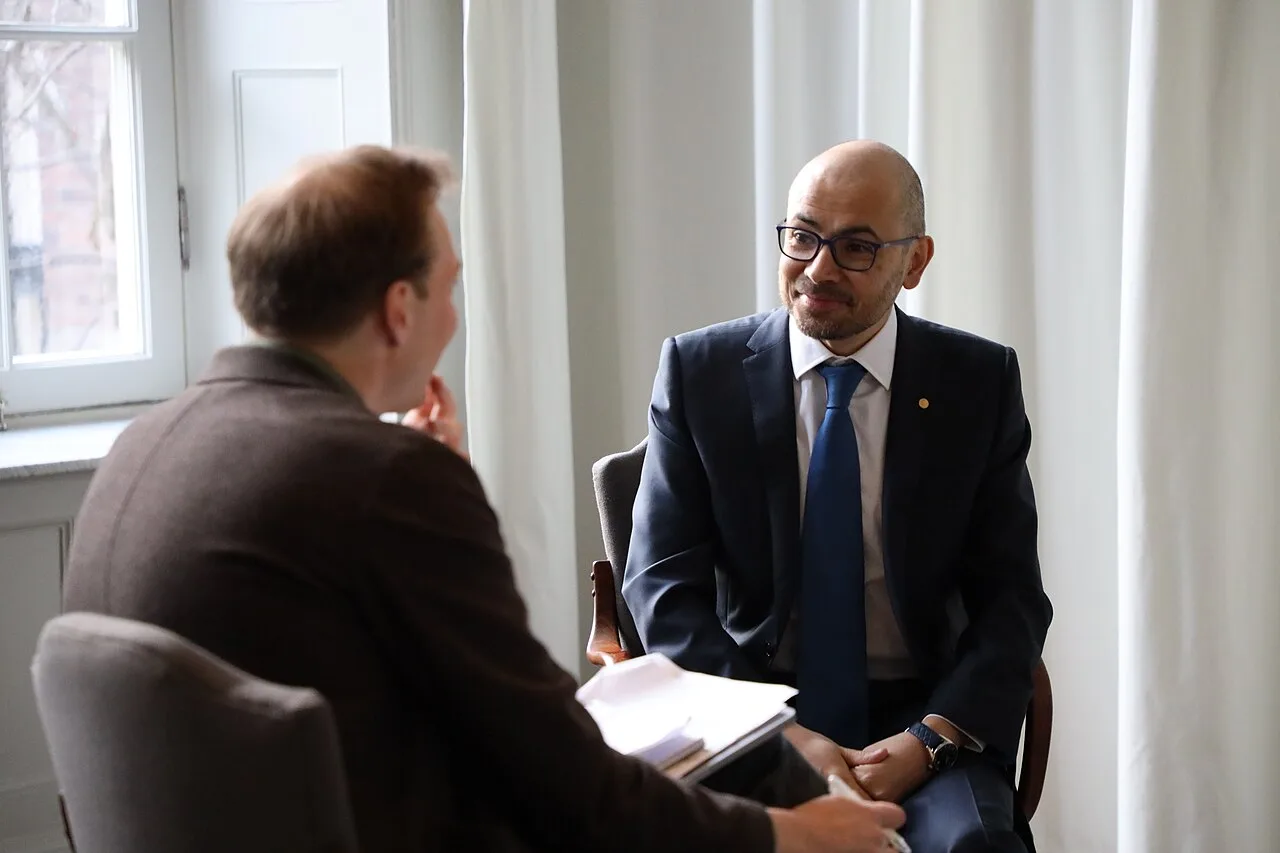
Cover image: Demis Hassabis at the 2024 Nobel Week by Jennifer 8. Lee, CC BY-SA 4.0, via Wikimedia Commons. Archive photo of Isomorphic Labs founder Demis Hassabis.